Top 23 Recommended SEO Tools
What Is Ahrefs? Plan Selection and Basic Usage
Updated: by Heysho
When considering Ahrefs, do you find yourself wondering about the following?
- Is the free version sufficient to verify only your own site?
- Which features should you check first after signing up, and what data should you record?
- How should you distinguish estimated metrics like organic traffic and Domain Rating from actual Google Search Console data?
Ahrefs is an SEO and marketing analysis tool that allows you to research competitor search keywords, backlinks, and technical issues on your own website.
Before subscribing, define your research targets and required outputs. Use Ahrefs' estimates alongside actual data from Google Search Console and web analytics.
This guide explains pricing plans, pre-signup checklists, three essential initial analyses, keyword research, and metric interpretations.
By the end of this article, you will know which plan to try and how to define key metrics and completion criteria for your first analysis.
Table of Contents
- What Ahrefs Can and Cannot Do
- Differences Between Free, Starter, and Paid Plans
- Five Points to Confirm Before Subscribing
- Three Essential Analyses After Setup
- Basic Keyword Research Steps
- Caveats for Ahrefs Metrics
- Summary
What Ahrefs Can and Cannot Do
Ahrefs helps you compare multiple websites using consistent metrics.
Determine optimization priorities and business impact by checking your site's actual performance and customer impact.
| Task | Key Features | Insights | Limitations |
|---|---|---|---|
| Competitor Analysis | Site Explorer | Competitor's estimated traffic, top pages, and search keywords | High estimated traffic does not guarantee relevance to your product or customers. |
| Keyword Research | Keywords Explorer | Related terms, estimated search volume, keyword difficulty, and search results | Check actual search results to align search intent with your content. |
| Backlink Analysis | Site Explorer | Referring pages, referring domains, and anchor text | Do not judge link quality solely by link quantity or DR. |
| Site Audit | Site Audit | Technical and on-page SEO issues detected by crawling | Prioritize fixes based on page importance and user impact. |
| Rank Tracking | Rank Tracker | Ranking trends of registered keywords | Review impressions, clicks, and conversions together. |
| Content Explorer | Content Explorer | Top-performing pages by backlinks and social interactions for a topic | Available in Standard plan or higher. Read the pages to understand why they succeeded. |
Use Ahrefs to identify competitors. For your site's actual performance, use Google Search Console and web analytics. Rely on internal data for inquiries and sales.
Differences Between Free, Starter, and Paid Plans
The following comparison reflects Ahrefs' pricing page and official help as of July 19, 2026.
| Plan | Monthly Price | Research Target | Limits & Outputs | Recommendation |
|---|---|---|---|---|
| Ahrefs Free | Free | Verified own sites | Site Explorer shows up to 1,000 backlinks and keywords. Site Audit provides 5,000 crawl credits per project monthly. | Start by checking your own site's current status. |
| Starter | $29 | Own sites and competitor sites | Use Site Explorer and Keywords Explorer with 200 monthly credits. No data export. | Try minor competitor and keyword research on-screen. |
| Lite | $129 | Own sites and competitor sites | 1,000 monthly credits, reports up to 2,500 rows, export up to 500,000 rows monthly. | Run ongoing research and share data via CSV. |
To analyze only your own site, verify ownership and start with Ahrefs Free for site audits.
To research competitors or use Keywords Explorer in moderation, choose Starter. If you need CSV exports and ongoing team sharing, select Lite or higher.
Prices, credit consumption, and feature availability change. Recheck the official help for free features and the pricing page before signing up.
Five Points to Confirm Before Subscribing
List your research targets and required outputs before choosing a plan. Unused features are not a reason to upgrade.
- Research Targets: Start with Free if you only need to check your own verified site. Consider Starter or higher for competitors.
- Priority Tasks: Choose one primary task to start with: site audit, competitor analysis, keyword research, backlink analysis, or rank tracking.
- Frequency: Decide if this is a one-time check or a weekly/monthly update to estimate required credits.
- Required Outputs: Choose Starter if on-screen analysis is sufficient. Consider Lite or higher to export, share, or process CSV data.
- Users & Budget: Define your monthly budget limit, including the number of team members, additional seat costs, and data limits.
Documenting your answers to these five items, along with your chosen plan and reassessment criteria, prevents setup issues after subscribing.
 Heysho
For example, if a single content marketer checks three competitor sites monthly and selects 20 top page candidates on-screen:
Start with Starter. Reassess the Lite plan when you need to export and process candidates in CSV. This keeps initial requirements clear.
Three Essential Analyses After Setup
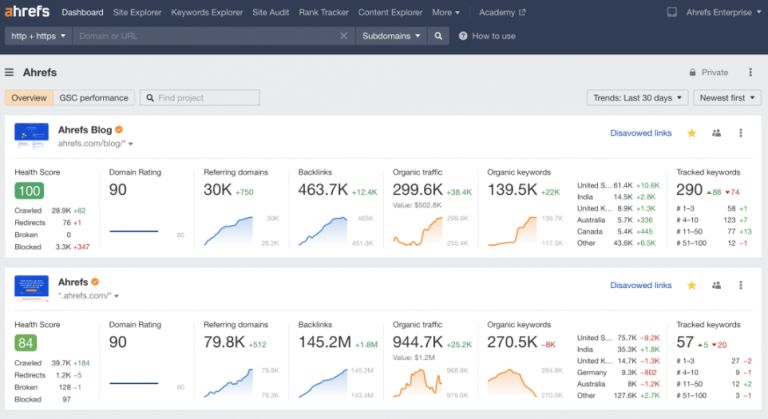
1. Register Your Site to Establish a Baseline
Add your verified site to projects and run a Site Audit, including key pages.
Record important URLs, crawlability, indexation blocks, internal links, detected issues, check dates, and owners in a tracking sheet.
Prioritize fixes based on whether search engines can access the pages and whether the issues affect visitors.
The analysis is complete when you list key page issues and assign team members to resolve them.
2. Research Competitors' Top Pages and Keywords
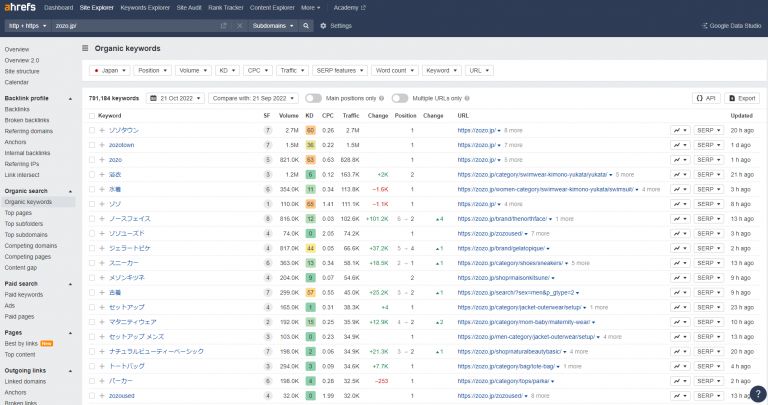
Enter a competitor's domain in Site Explorer to check their top pages and organic keywords.
For each candidate, record the competitor page, main keywords, search intent, missing details on your site, evidence you can provide, and reasons to target or skip.
Select candidates that align with your product, customer pain points, and actual search results.
This step is complete when you select at least one page to create or update.
3. Analyze Why Competitors Earn Backlinks
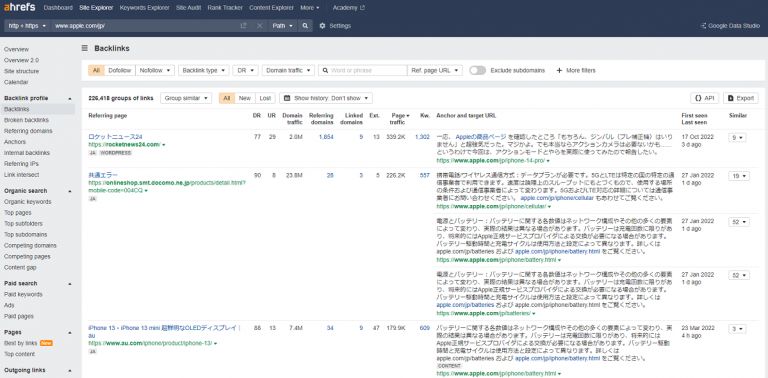
Open Backlinks for competitor pages in Site Explorer to check referring pages and link destinations.
Record the referrer, destination, referenced information, link context, linkable assets you can replicate, and owners.
Identify reasons to link, such as original research, comparison tables, or templates.
This analysis is complete when you define at least one asset to build.
Basic Keyword Research Steps
Filter keyword candidates based on search intent and user problems you can resolve.
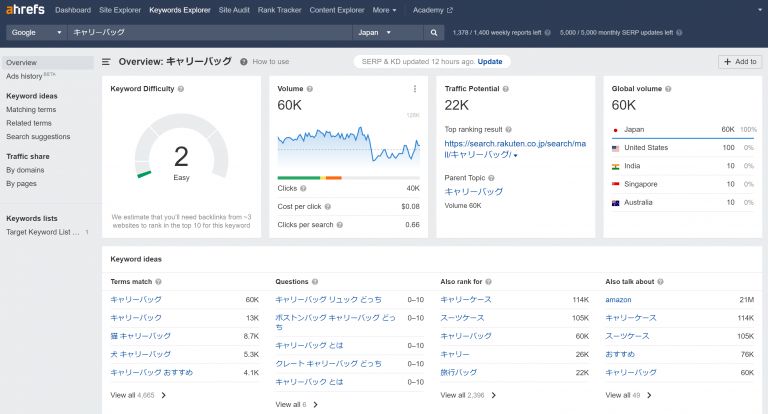
- Enter base terms representing your product, customer questions, or solutions into Keywords Explorer.
- Group related candidates by search intent: informational, commercial, transactional, or navigational.
- Open actual search results for each candidate to check the required format (e.g., blog posts, comparison tables, product pages).
- Compare what competitor pages cover with your first-hand data or expertise.
- Assign target pages, reasons to target or skip, priorities, and owners, then save them in your tracking sheet.
Keep tracking sheets simple: record candidate keywords, search intent, target pages, customer problems, competitor gaps, priority, owner, and check date.
Assign candidates only when the search format matches your offering. Document skip reasons to complete the step.
HeyshoFor example, if a B2B attendance management service provider researches 'attendance management methods' and 'attendance management system comparison':
Map the latter to a comparison page because it targets high-intent buyers. Postpone the former for a separate informational article. Recording these reasons prevents confusion.
Caveats for Ahrefs Metrics
Use Ahrefs metrics to compare candidates and identify trends.
Track actual business performance using real data.
- Organic traffic: An estimated value calculated from search rankings, not actual web analytics sessions. Track your performance using Google Search Console clicks and web analytics.
- Search volume: An estimate based on historical data. It does not guarantee future traffic. Check seasonality, live search results, and relevance to customer problems.
- Keyword Difficulty: Ahrefs' custom metric based on referring domains of top pages. Check search intent, required expertise, and your unique proof separately.
- Domain Rating: Ahrefs' relative metric based on backlink profiles. This is not a Google ranking factor. Do not judge site quality or competitor strength by DR alone.
After publishing content or changes, measure success using real metrics like Search Console clicks, web analytics sessions, inquiries, and sales.
Summary
Ahrefs helps you compare your site with competitors using consistent metrics to find keywords, content ideas, and link prospects.
Combine these estimated values with live search results, actual performance data, and customer pain points.
Follow these initial steps:
- Choose one primary goal: site audit, competitor analysis, keyword research, or backlink check.
- Start with the smallest plan that fits your needs: Free to check your site, or Starter for light competitor research.
- Record your actions, decision reasons, owners, check dates, and review conditions in a tracking sheet.
If you start with backlink research, also check How to Assess Backlink Quality and Build Links Safely.